From Coastal Convenience to Quality Care: Why Super Bees Academy Stands Out Near Costa Mesa
For families in and around Costa Mesa, the search for early childhood care rarely starts with just one question. It starts with a cluster of practical concerns that all feel urgent at once. Can I get there on time before work? Will my child feel safe? Are the teachers warm, alert, and consistent? Is this a place where my child will simply be supervised, or a place where they will actually grow?
That mix of logistics and trust defines how parents choose among preschools in Costa Mesa and nearby communities. On paper, many programs can sound similar. They mention nurturing environments, structured learning, and caring staff. Yet parents know the difference quickly when they walk through the door. Some schools feel hurried. Some feel sterile. Some look beautiful online but operate with the emotional temperature of a waiting room. Others have something harder to fake: calm classrooms, intentional routines, and adults who seem to understand children, not just manage them.
That is where Super Bees Academy earns attention. Near Costa Mesa, convenience matters, but convenience alone does not build confidence. A program stands out when it supports the daily reality of local families while also delivering the kind of care that makes parents exhale after drop-off. Quality in early education is rarely about one flashy feature. It is built from dozens of decisions, repeated every day, in the classroom, on the playground, at lunchtime, and in the conversations teachers have with children and parents alike.
Why location matters more than people admit
Parents sometimes feel guilty for caring so much about commute time, parking, traffic flow, or whether a center sits along a workable route between home and work. They should not. The practical side of childcare affects family life far more than most brochures acknowledge.
Costa Mesa families often juggle dense morning schedules, freeway timing, school-aged siblings, and work commitments that leave little room for detours. A school that is technically excellent but chronically inconvenient can turn every weekday into a negotiation. A center located near Costa Mesa, with easy access for local families, can reduce stress before the school day even begins. That matters for adults, and it matters for children too. Kids feel rushed drop-offs. They absorb tension in the car. They notice when every morning begins with, “Come on, we’re late.”
The best daycare in Costa Mesa is not always the one with the loudest marketing. Often, it is the one that fits naturally into a family’s rhythm while still delivering strong developmental care. When a school is accessible and well-run, parents are more likely to arrive calmly, talk briefly with staff, and transition their child with confidence instead of urgency. Over time, those seemingly small details shape a child’s sense of security.
Families who search for daycares in Costa Mesa are often comparing more than classroom philosophy. They are quietly calculating drive times, pickup windows, and whether they can realistically maintain this routine for months or years. A center that respects that reality has a meaningful advantage.

The difference between supervision and real early childhood care
One of the most important distinctions in this field is also one of the least visible from a website. There is a big gap between a program that watches children and a program that truly teaches, guides, and understands them.
Good early education does not mean turning preschool into miniature elementary school. Young children do not need long academic blocks or worksheets masquerading as rigor. They need language-rich environments, thoughtful routines, sensory exploration, movement, social practice, and responsive adults who know when to step in and when to step back.
This is one reason so many parents looking at a costa mesa daycare option feel uncertain during the search. Two schools can both advertise play-based learning, but only one may use that phrase with real depth. In a strong classroom, play is not filler. It is the vehicle through which children test ideas, build vocabulary, negotiate turn-taking, and develop patience. A teacher kneeling beside a child’s block structure might be supporting early engineering, sequencing, frustration tolerance, and expressive language all at once. That is skilled work.
Programs that stand out tend to understand child development in practical terms. They know a toddler’s biting phase requires a different response than a preschooler’s conflict over toys. They understand that transitions are often harder than activities. They build predictable routines because children thrive when the day makes sense. They expect spills, big feelings, and changing attention spans, then plan accordingly instead of reacting with frustration.
When parents tour a school near Costa Mesa and leave thinking, “They really seem to get kids,” that impression is usually based on these subtle, professional choices.
What families notice right away at a strong program
Even without formal training in education, parents are often excellent judges of quality when they know what to watch for. The strongest centers do not rely on polished talk alone. Their day-to-day operation gives them away.
You see it in the tone of the room. Teachers are not speaking over children all day. They are guiding. The space feels active but not chaotic. Materials are accessible, but the room does not look overloaded. Children are doing things, not just waiting for the next thing to happen.
You hear it in the language adults use. Strong teachers tend to be specific. Instead of saying, “Good job,” all day, they might say, “You kept trying even when that was tricky,” or “You found a way to share the space.” That kind of feedback supports confidence without empty praise. It also shows adults are paying attention.
You feel it in the handoff at pickup. Parents are not met with a generic “She had a good day.” They hear something concrete. Maybe their child painted with unusual focus, helped clean up without prompting, or needed extra reassurance before nap. Those details tell families that staff members are present, observant, and engaged.
A school like Super Bees Academy stands out in this context when the experience feels coherent. The physical setting, the staff interactions, the pacing of the day, and the communication with parents all point in the same direction. That consistency is worth more than trend-based branding.
Safety is not a slogan
Every parent expects safety. The challenge is that many centers describe safety in broad, comforting language that tells you very little. Real safety is procedural. It lives in habits, systems, and accountability.
At a high-quality preschool or daycare, safety shows up in controlled access, organized sign-in and sign-out routines, active classroom supervision, clean learning areas, and age-appropriate setup. It also shows up in how adults respond to the unexpected. If a child falls, melts down, refuses lunch, or spikes a fever, the program should have clear, calm protocols. The best staff members do not improvise under pressure. They are prepared.
This matters deeply for families searching daycare in Costa Mesa, especially those with very young children. A one-year-old needs a different environment than a four-year-old. Furniture height, toy selection, outdoor equipment, meal supervision, diapering or toileting support, and rest routines all require care and precision. Parents are right to ask detailed questions here. Safety is not only about preventing major incidents. It is also about reducing the steady stream of smaller risks that come with group care.
Another overlooked aspect of safety is emotional safety. Children learn best when they feel secure. A center may be spotless and orderly, but if the adult tone is sharp or impatient, children absorb that too. Emotional safety means children can make mistakes, express sadness, or struggle through a transition without being shamed. That kind of environment produces calmer classrooms and stronger learning.
The best programs respect child development, not just parent expectations
Costa Mesa parents are often thoughtful, involved, and ambitious for their children. That is not a bad thing. Still, strong schools know how to balance parent hopes with what is genuinely appropriate for young learners.
Early childhood settings can fall into one of two traps. Some under-challenge children, assuming that fun alone is enough. Others overcorrect and push formal academics too early. Neither approach serves children especially well.
A program that stands out near Costa Mesa usually finds the middle ground. It introduces structure without rigidity. It builds school-readiness through real experiences: listening during circle time, asking for help, managing materials, recognizing routines, and speaking with confidence. Literacy and numeracy can absolutely begin early, but they should be woven into songs, storytelling, sensory work, pattern play, counting during cleanup, and everyday conversation.
This is where families comparing preschools in Costa Mesa often benefit from looking beyond curriculum labels. Ask how children spend the middle of the morning. Ask what happens when a child resists an activity. Ask how teachers support language growth for shy children and self-regulation for active ones. The answers will tell you much more than a banner promising kindergarten readiness.
The schools that hold up over time are not the ones that try to impress parents with adult definitions of achievement. They are the ones that help children become capable, curious, and socially grounded.
Communication can make or break the parent experience
Parents do not need constant updates every hour, but they do need meaningful communication. There is a sweet spot between silence and over-reporting, and experienced programs know how to hit it.
A well-run academy near Costa Mesa understands that childcare is a partnership. Parents should not feel that their child disappears into a black box from drop-off to pickup. At the same time, teachers cannot provide a dissertation every afternoon while supervising a room full of young children. The goal is clarity and consistency.
Good communication includes practical updates, honest observations, and enough context to help parents respond well at home. If a child is having a rough week with transitions, families should hear that early. If there is a new interest in art, books, bugs, or building, parents appreciate hearing that too because it gives them a way to connect the school day to home life.
Experienced educators also know how to communicate concern without creating alarm. A child who bites once is not necessarily a chronic biter. A child who cries at separation is not automatically “not ready.” Context matters. Schools that speak in balanced, thoughtful terms tend to earn more trust from parents than schools that either minimize everything or dramatize minor issues.
For many families considering daycares in Costa Mesa, this becomes a deciding factor. Beautiful facilities and convenient hours matter, but the relationship with staff is what carries a family through teething, sleep regressions, developmental leaps, potty training, and all the other phases early childhood brings.
The classroom environment should work for children, not just look nice in photos
It is easy to be impressed by aesthetics. Fresh paint, neutral palettes, custom shelving, and beautifully arranged activity areas photograph well. But the strongest classrooms are designed for function first.
Young children need spaces that invite participation. They should be able to reach materials, move between activities without constant bottlenecks, and understand where different parts of the day happen. A reading nook should feel calmer than an active play area. Art should be set up with enough order that children can create without constant adult rescue. Rest spaces should support actual rest, not just fulfill a licensing requirement.
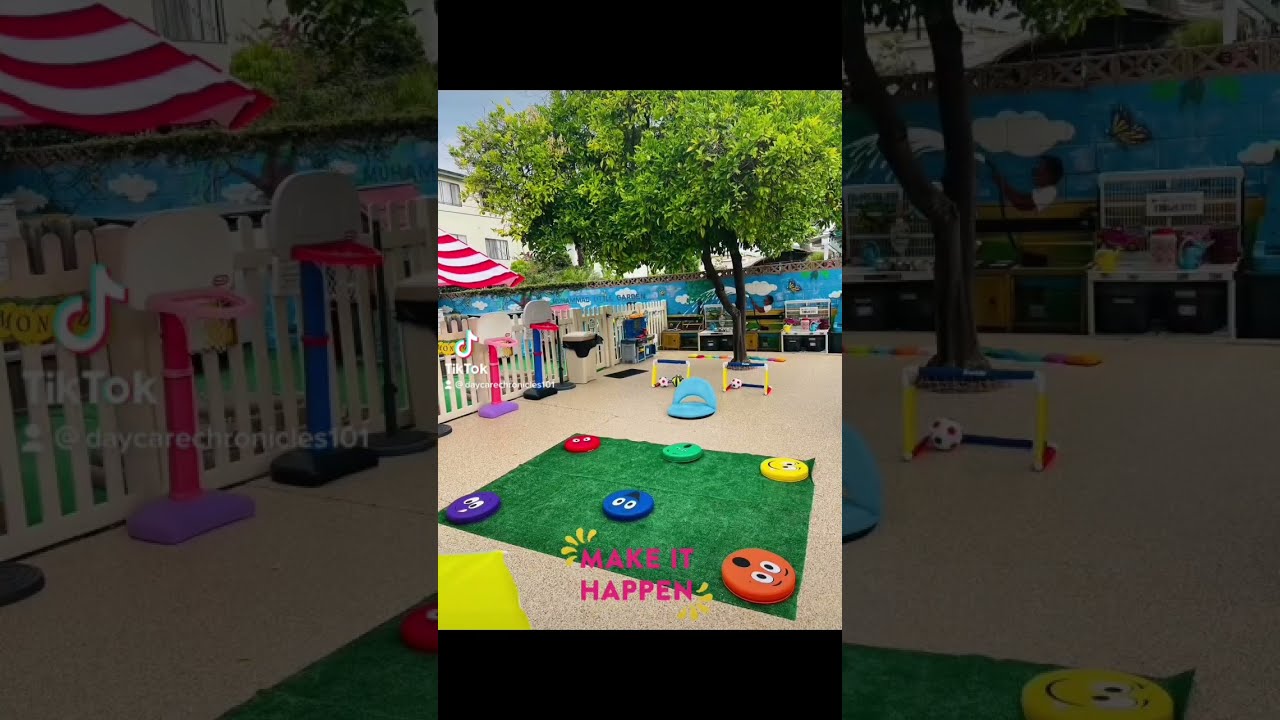
The same principle applies outdoors. Strong programs use outdoor time as part of development, not simply recess to burn off energy. Children need room to run, climb, balance, dig, pretend, and observe. Outdoor play builds strength, confidence, and social cooperation. It also helps many children regulate after indoor group time.
When a costa mesa daycare option is praised by local parents, this practical usability is often part of the reason, even if they do not describe it in those exact terms. They may say their child settles quickly, comes home happy, talks about teachers by name, or starts showing new independence at home. Those outcomes often grow from a classroom environment that has been thoughtfully built around actual child behavior.
Why consistency matters so much in the early years
A great day at school is nice. A great month is what really counts.
Children under five thrive on repetition, stable relationships, and dependable rhythms. They notice staffing changes quickly. They struggle when expectations shift from one day to the next. They benefit enormously from seeing familiar adults respond in familiar ways.
That is why consistency is one of the least glamorous but most important markers of quality. A school can host a charming event or send home attractive crafts, but if its routines are uneven or its turnover is high, families will feel the instability sooner or later.
Programs that stand out typically build trust through repetition. Morning greeting routines are warm and predictable. Meals happen on time. Rest is handled with patience. Group activities have a clear beginning and end. Teachers follow through. Expectations are age-appropriate but steady. Children learn not just what will happen next, but that the adults around them are reliable.

For working parents, this reliability has a second benefit. It reduces the emotional labor of childcare. When you know the center is organized, communicative, and developmentally sound, you stop bracing for surprises every week. That is part of quality care too.
A good fit serves both the child and the family
One of the most honest truths in early education is that there is no single perfect program superbeesacademy for every child. A highly social child may blossom in a lively classroom where another child feels overwhelmed. A child who warms slowly may need especially skilled transition support. An infant care need is different from preschool readiness. A family working hospital shifts may prioritize schedule flexibility in a way another family does not.
So when people ask why Super Bees Academy stands out near Costa Mesa, the most useful answer is not a generic claim that it is for everyone. It is that the right school understands both child development and family reality, then brings those two pieces together in a way that feels stable, thoughtful, and genuinely supportive.
That is what many parents are looking for when they search terms like daycare in Costa Mesa or preschools in Costa Mesa. They are not just shopping for coverage. They are trying to find a place that can become part of the architecture of family life, a place where their child is known, where routines make sense, and where care extends beyond the bare minimum.
The standards for that kind of care are actually quite clear when you strip away marketing language. Children should be safe. They should be spoken to with respect. They should have room to play, learn, rest, and grow. Their parents should feel informed, welcomed, and confident that problems will be handled well. The program should fit the pace of real life in and around Costa Mesa, where convenience is valuable, but quality is non-negotiable.
That combination is what makes a school memorable. It is also what makes it worth recommending.
For families narrowing down options, the smartest next step is not to rely on claims alone. Visit. Observe. Listen to how the adults talk to children. Notice whether the classrooms feel settled. Pay attention to whether your own shoulders drop a little once you are inside. Parents often sense quality before they can fully articulate it.
And when a program near Costa Mesa offers both practical convenience and genuinely attentive care, it does more than solve a scheduling problem. It becomes a place where children build confidence, friendships, language, and trust in the world around them. That is the standard families should hold onto, and it is why a school like Super Bees Academy can stand out in a crowded field.